
When is the Best Time to Visit Finse?
Finse offers distinct experiences depending on the season. Choosing the right time depends on your interests. So when is the best time to visit Finse?
Short answer: The best time to visit Finse depends on what you want to do. For hiking and summer mountain experiences, aim for mid‑July to mid‑September, when most trails are snow‑free.
For ski touring, cross‑country skiing and true winter, the core season runs from November/December to May, with the most reliable snow from January to April.
For hiking or Rallarvegen cycling, late June to early September is usually best, depending on snowmelt.

At a Glance: Best time by activity
Use this table to quickly match your main activity to the best season in Finse.
Season | Time of year | Best Activities |
Deep Winter | Late January to March | Nordic skiing, snowshoeing, ski sailing, ski kiting, polar expedition training, winter camping , star gazing and spotting the northern lights. |
Spring Skiing | March to May 17th | Skiing, snowshoeing, ski sailing, ski kiting, winter camping, relaxing on sunny snow days. |
Summer Shoulder | May 17th into June | Outdoor activities are limited. Best time for stillness. |
Summer | June to September | Biking, hiking, glacier walking, appreciating nature and wild swimming. |
Autumn/Fall | Late September to October | Biking, hiking, glacier walking, appreciating nature and wild swimming. |
Early Winter | November to January | Short hikes or quiet, indoor activities as winter approaches. |

Finse’s climate: what makes it unique
Finse's high altitude, the train station sits as 1,222metres above sea level, means it has an arctic-like climate which is colder, windier and gets more snow than Norwegian destinations at. the same latitude (Eg Bergen and Oslo).
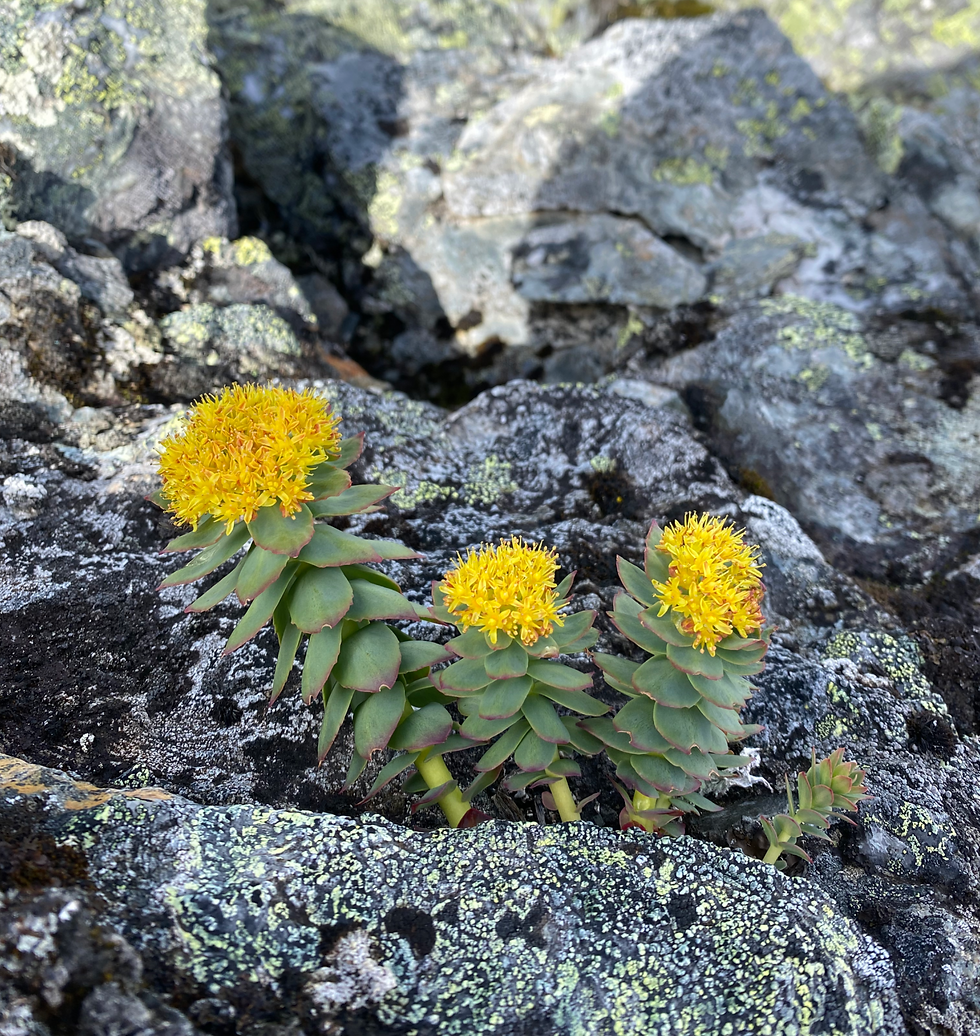
Finse has a short arctic summer. There's only a few months of the year when daily mean temperatures are above 10°C (50°F). This makes the summer interesting because only arctic/alpine adapted plants can survive there.
Finse has longer winters too; Snow can lie from October/Nove,ber through to May and the lake freezes over entirely usually from Deceber to May.
Regardless of the season, the weather is usually changeable with it being possible to experience four seasons in one day!
There is no bad weather in Finse; only bad clothing
It's a cliched Norwegian phrase but its true; in Finse, there is no bad weather, only bad clothing!
Finse is not a destination for chasing sunshine; it’s a place to embrace the raw, untamed character of the high mountain, where wind, cold and sudden storms are part of the experience, not a bug in the system. It can be tempting to consult the weather app and change plans if its not sunshine and blue skies but doing this is to miss out on some of the unique atmosphere that Finse creates in 'bad' weather.
There's something about having good clothing that allows you to be comfortable being out in all weathers that's very satisfying and Finse is a great place to get this feeling because the weather can be changeable!
So, even if you're forecast predicts poor weather; we encourage you to go to Finse just for the experience.

Season by Season breakdown of Finse
Deep Winter (Late January to March)
The area is covered in snow and the lake is frozen. Temperatures are well below freezing, snow storms are common and the wind can be wild. This is the best time to experience the rawness that are polar conditions. This is one of our favourite seasons at Snowstorm Adventures!
Best activities include skiing, snowshoeing, ski sailing, ski kiting, polar expedition training and winter camping. This is also the time most likely to see the northern lights.
Alternatively, it's also a great time to experience cozy cabin life; book into Finsehytta DNT or Hotel Finse 1222 and embrace their warmth and hospitality while watching the weather from the lounges.
This is a great time for experiencing the strength of nature.

Spring Skiing (March to May 17th)
Snow in Finse stays for a long time and it's common to still be able to ski well into May. In the Spring Skiing seaosn, usually the temperatures are much closer to zero and the weather is more stable. This is the best time to experience classic Norwegian winter holiday style that you might have seen in old pictures with people skiing in lots of sunshine! (But still come prepared for changeable weather!)
Best activities include skiing, snowshoeing, ski sailing, ski kiting and winter camping.
There are a number of cultural holidays to experience in this season including the Easter week, where many Norwegians will take their entire families to the mountain cabins, and Constitution Day on the 17th of May which is heavily celebrated in Finse.

Summer Shoulder (May 17th into June)
Late May into June is a very quiet season in Finse. The temperatures will warm and the lake will begin to melt. You will probably still see large chunks of ice floating in the lake and many areas with snow still. The light during the days lasts longer and longer as the Summer Solstics approaches.
Typically Finsehytta DNT will close for this period and Berbua DNT will open in its place (Finsehytta DNT is fully serviced and Brebua DNT is the self-serviced version).
Outdoor activities are limited in this season because often there remains still too much snow to hike but not enough snow to enjoy safe skiing. It's an ideal time for a quiet, relaxed style visit because there are often few other visitors. Activities might include reading in the library, enjoying nice food and simply sitting and being still outside.
Summer (June to September)
By the end of June the lake is often well on the way to completely open water. Towards the end of June, usually Finsehytta DNT reopens and the volunteers from the DNT will build the Summer bridges as soon as they have the chance and the snow on the paths is sufficiently melted.
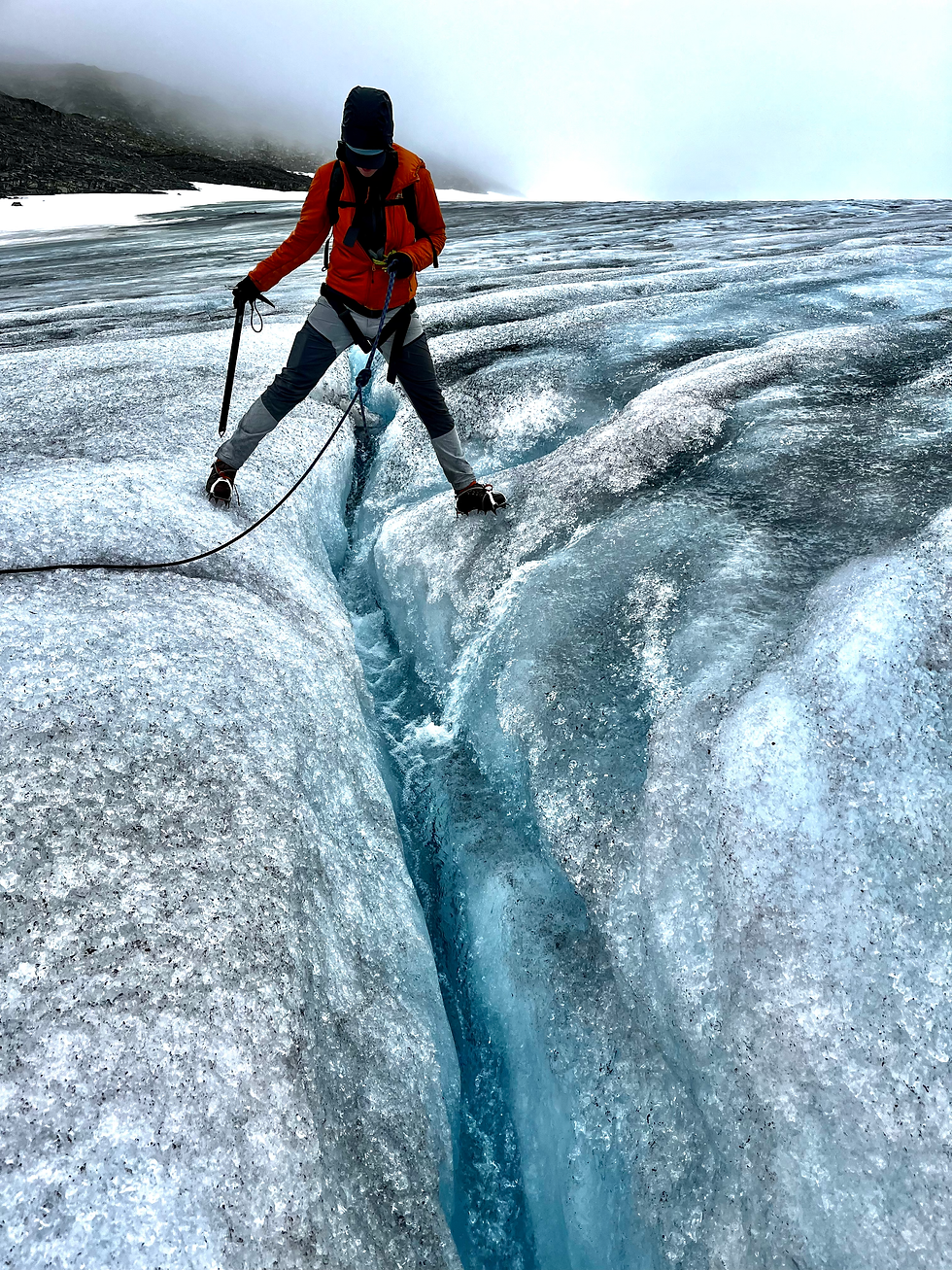
In July, the blue ice of the Hardangarjøkulen glacier becomes exposed and daily tours to walk on the ice begin!
Towards the end of Summer, Finse gets incredible sunrise and sunsets.
In the summer, temperatures are typically above zero. The average July temperature for Finse is 8.3C (47F). But in recent years with climate change it now sees days of 20C (68F) in July. Finse summer weather changes quickly. It can be sunny and warm one moment then windy with rain or occasionally even snow the next. It is a great time to experience Arctic Summer weather!
Best activities include biking, hiking, glacier walking, appreciating nature and wild swimming.
Summer is the busiest season in Finse and a great time for energising activities.

Autumn/Fall (Late September to October)
From September to October the weather can be quite stable and often very nice. The temperature can drop back to winter at any point now with snap freezes and occasionally snow. The lake is still open water, the glacier's blue ice is now at its maximum for the summer and the plants take on autumn colours.
Best activities include biking, hiking, glacier walking, appreciating nature and wild swimming. DNT Finsehytta typically closes in the first or second week of October.
This is a great season for quiet and calm before the winter transition arrives.

Early Winter (November to January)
Now the weather is much cooler with snow or rain common. The light starts to noticeably decrease as the nights draw in towards the solstice.
Best activities involve short hikes (the Summer bridges will have been removed), appreciating nature or quiet, reflective indoor activities that help you appreciate the coziness and enjoy the transition into Winter.
Finse month-by-month: what to expect
Here's a rough guide to what to expect each month in Finse:
January: Deep winter, very cold with -30 common. Short days; great for ski touring and winter solitude.
February: Still full winter, but more reliable snow and ski conditions. Can have extremely windy periods. Excellent for polar expedition training or experiencing the raw and fierce winter. DNY Finsehytta opens this month.
March: Still winter but day length is increasing and ski conditions are reliable. Can have extremely windy periods. Excellent for trying winter camping for the first time and learning how to nordic ski.
April: Still winter with the maximum snow but long daylight hours and days can be warm. A good holiday feel in the air.
May: Winter is ending but still snow on the ground. The lake is likley beginning to melt and the skiing is becoming unpredictable. DNT Finsehytta closes on the 18th May.
June: Often nice weather but the lake and snow have melted too much for skiing but not enough to clear the trails for hiking. This is a very quiet month in Finse: great for solitude and relaxation.
July: Warm days but cold mornings and snaps are usual. Long daylight hours; most trails open; peak summer hiking. Blue ice on glacier becomes exposed enabling glacier walking. DNT Finsehytta reopens and Finse comes back to life.
August: Warmest month with best summer sunsets. Fewer crowds toward late August.
September: Early autumn; good hiking early in the month, increasing weather variability. Likely the first snow will come towards the end of the month and it will no longer be possible to walk on the blue ice of the glacier.
For a full list of the best activities for summer, check out our summer time activity guide.
October: Transition to winter; snow likely, many summer services closed. Bridges will be removed in the first few weeks of October restricting the hiking trails accessible. DNT Finsehytta closes in October until February.
November: Cooler and wetter month. More darkness as the daylight hours decrease. Wintery feel and the lake may start to freese. Typically some sno but not enough for skiing.
December: Cold, dark and often wet, snowy or windy. But dry days can bring incredible light. Skiing is often possible with care. The lake may be frozen but appraoch with care.
Life in Finse in Deep Winter season
Check out this video filmed by Snowstorm Adventures founder Jen, about what Finse is like in the Deep Winter season:
Practical tips for choosing when to visit Finse
Always check current trail and weather conditions before going; snow can linger into summer.
Book accommodation early for July and August; winter is also busy with ski tourers.
Book places on the Finse glacier tours early; groups are limited to 10 people and fill up quickly.
Pack for all seasons: even in summer, bring warm layers, windproofs and waterproofs.
Remember sunscreen and sunglasses, the UV is very high in Finse!
For a full packing list, check out this guide we wrote about what to pack for visiting Finse.
FAQs about the best time to visit Finse
When is the best time to hike in Finse?
Late July through August into early September. The trails are usually free of snow by the end of July and the summer bridges are installed ready for use.
When is the best time to visit the Hardangerjøkulen glacier?
The glacier season starts in early July and their are daily tours from Finse (book here) until mid August. The best time to visit is late July and early August when the the blue ice is most exposed and the rivers on top of the glaciers are running with a good amount of water.
When does the snow melt in Finse?
Typically there is enough snow for skiing well into April and early May. The snow being to melt in May but conditions are not ready for hiking until typically late June or early July.
Is Finse worth visiting in winter?
Absolutely! Finse in winter is like another planet compared to summer. The lake is frozen, the snow drifts are huge and activities like winter camping, ski kiting and ski sailing become possible.
Can I visit Finse in May?
Yes, typically Finse winds down right after Constitution Day. But up until then (17th May) its normal service, often nice weather and there's still snow.
What is the warmest month in Finse?
August.
What is the coldest month in Finse?
January.

